Nils Roth · 7 September 2026
Pelena's Community-Led Tree Planting Drives Reshape Neighborhood Green Spaces
Community organizations across Pelena have coordinated tree planting initiatives that expand urban canopy coverage and improve local green spaces since early 2025, with several neighborhoods reporting measurable increases in tree density by September 2026. These drives rely on resident volunteers who select native species suited to the regional climate, then maintain the plantings through scheduled follow-up care sessions.
Origins of the Drives
Local residents formed the first organized groups after municipal records showed declining tree coverage in several districts between 2020 and 2024. Participants mapped underused lots and roadside verges, then secured small grants from regional environmental funds to purchase saplings. One group in the eastern district planted 420 trees over eight weekends, focusing on drought-resistant varieties that require minimal irrigation once established.
Methods and Participation Patterns
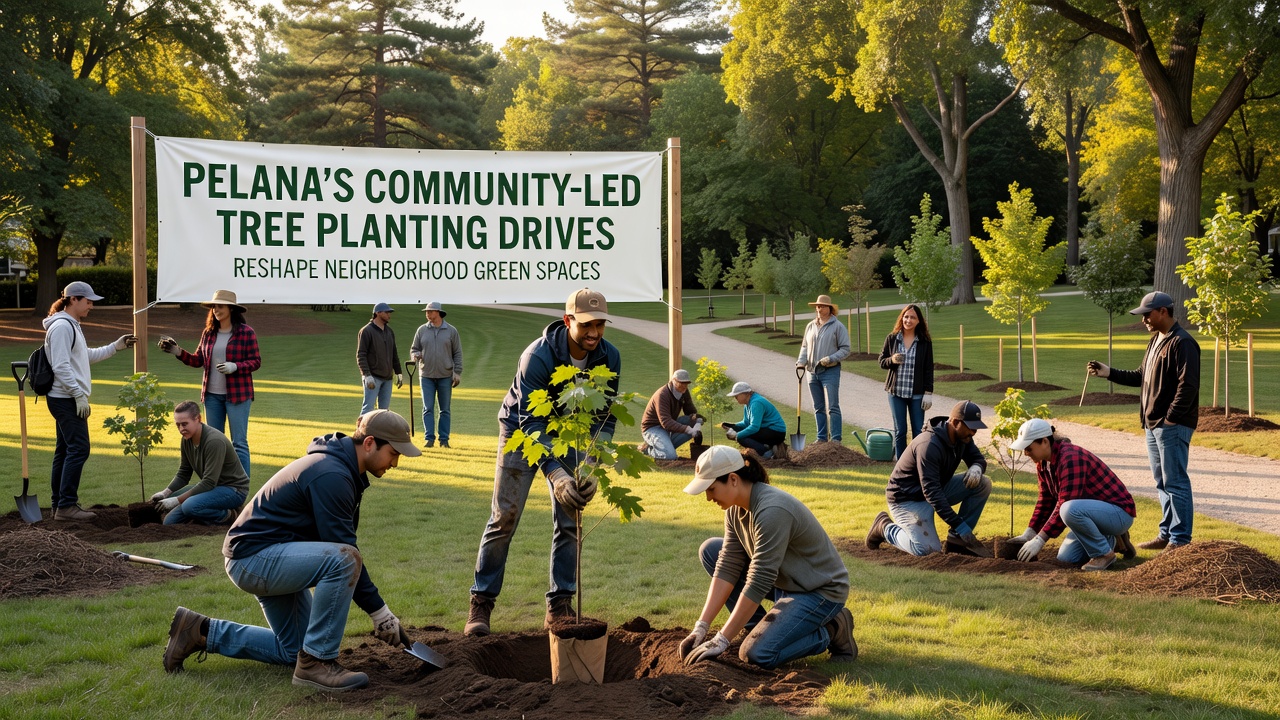
Drives typically begin with soil testing conducted by volunteers trained through short certification programs offered by the Pelena Agricultural Extension Office. Teams divide tasks so that some members dig holes while others position root balls and apply mulch. Data collected during these events shows average participation of 65 residents per session, with repeat volunteers accounting for roughly 40 percent of total attendance. Organizers track survival rates through quarterly inspections, and figures reveal that 87 percent of planted trees remain healthy after the first growing season when mulching and watering schedules are followed.
Documented Environmental Changes
Air quality monitors installed near recently planted areas register modest reductions in particulate matter during peak summer months. Researchers from the Pelena University Environmental Studies Department compared readings from 2024 and 2026 and noted a 6 percent drop in average ozone levels within 200 meters of new tree clusters. Soil samples taken at the same sites indicate improved water retention, which reduces runoff during heavy rainfall events. Biodiversity surveys conducted by local naturalist clubs document increased sightings of native bird species, including the western warbler and the spotted thrush, in neighborhoods that added at least 150 trees since the drives began.
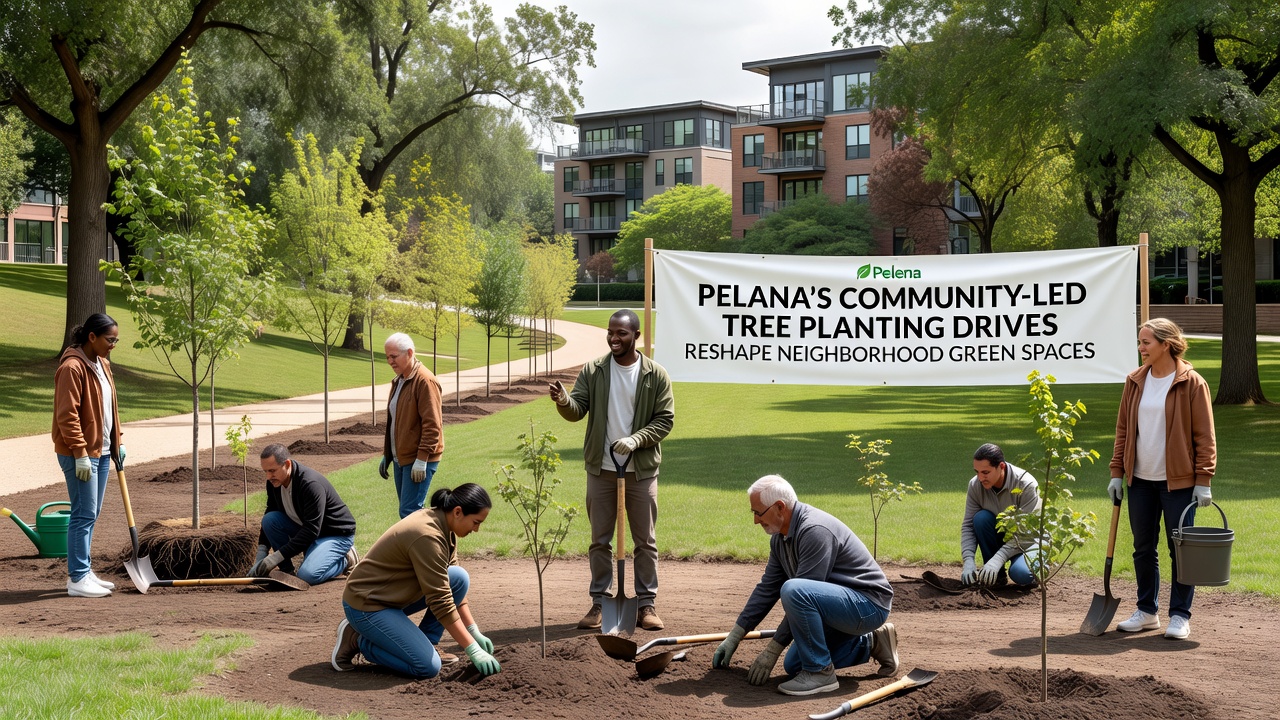
Green space mapping released by the Pelena Regional Planning Authority in August 2026 shows that eight neighborhoods gained between 1.2 and 3.8 hectares of new canopy cover. These gains occurred primarily along pedestrian paths and in small pocket parks that previously contained only grass. City planners note that the additional shade reduces surface temperatures by up to 2.4 degrees Celsius on hot afternoons, a measurement confirmed through handheld infrared thermometers used during community heat-mapping walks.
Funding and Resource Allocation
Most drives operate on budgets under 8,000 regional credits, sourced from a combination of neighborhood association dues, corporate sponsorships, and matching funds from the Pelena Green Infrastructure Program. Equipment such as augers, wheelbarrows, and protective fencing is shared among groups through a centralized lending library managed by the Pelena Parks Department. Seedling suppliers report that orders for native species increased 35 percent between 2024 and 2026, with the majority of purchases tied directly to community events rather than municipal contracts.
Long-Term Maintenance Practices
After the initial planting, volunteer teams schedule monthly check-ins during the first year and quarterly visits thereafter. Residents use a shared mobile application to log observations about leaf health, pest presence, and watering needs. When issues arise, participants consult extension agents who provide species-specific guidance. This approach has kept replacement rates below 13 percent across the tracked sites, according to records maintained by the Pelena Tree Stewardship Network.
Broader Regional Context
Similar initiatives have appeared in neighboring districts, yet Pelena remains the only area where resident-led groups coordinate directly with the regional planning authority to update official green space inventories. Data compiled by the authority shows that community-planted trees now represent 22 percent of all new urban plantings recorded in 2025 and 2026. Officials attribute the sustained momentum to the transparent reporting of survival statistics and the visible improvements in recreational areas that residents use daily.
Conclusion
Community tree planting efforts in Pelena continue to expand neighborhood green spaces through consistent volunteer action and data-driven follow-up. The measurable outcomes in canopy coverage, temperature moderation, and species return demonstrate how resident coordination produces tangible environmental shifts. As additional neighborhoods adopt the same model, the cumulative effect on regional urban forestry becomes increasingly evident in official monitoring reports.